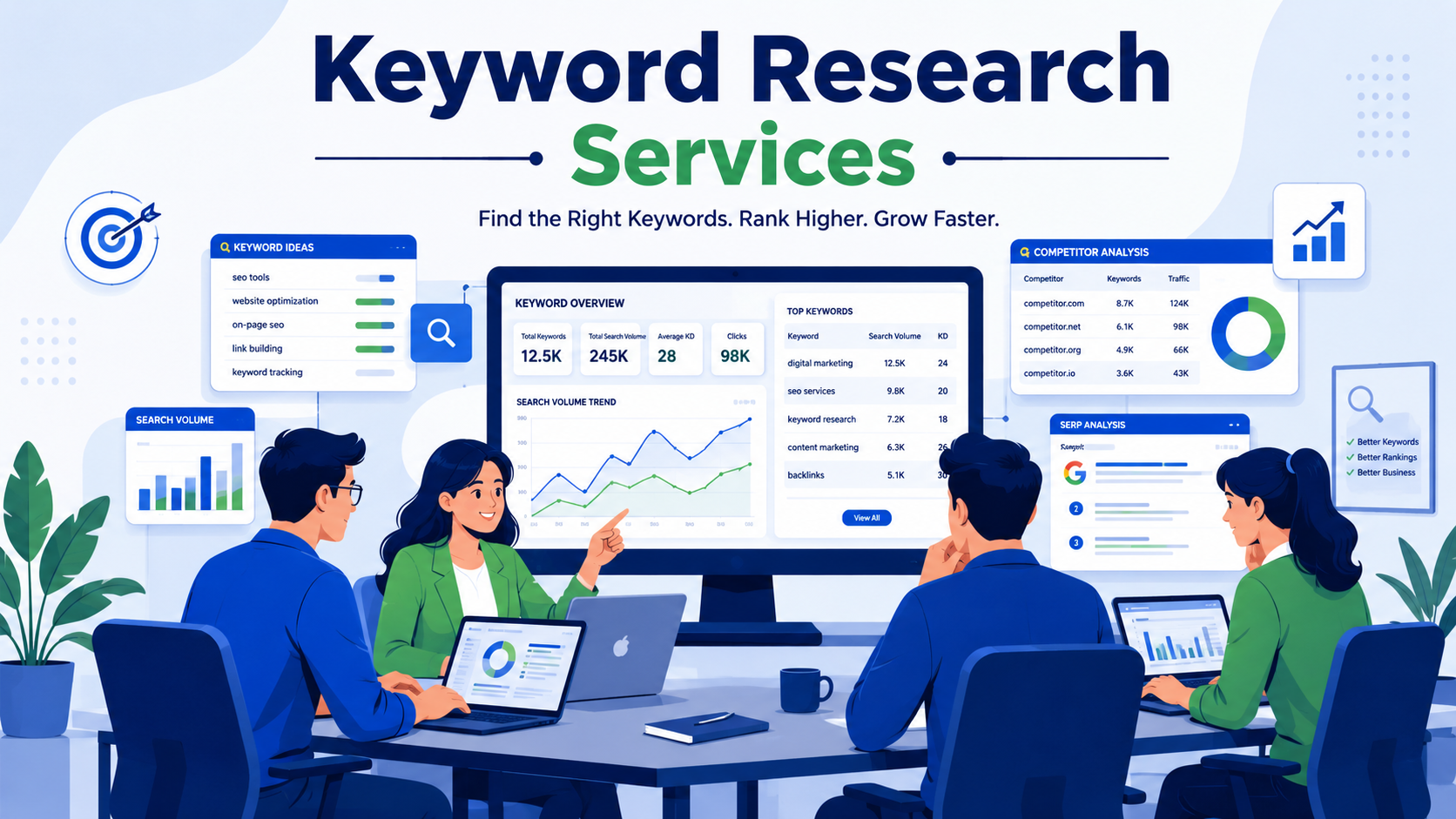
Every website owner wants more visitors. But most of them skip the one step that actually brings the right visitors in: proper keyword research. That’s where keyword research services come in, and they can change how your website performs in search results.
If you’ve ever wondered why your competitor ranks higher with less content, the answer usually comes down to smarter word choices. They picked the terms real people search for. This guide walks you through everything you need to know about keyword research services, the tools behind them, and how to choose the right fit for your business.
What Keyword Research Really Means for Your Website
Keyword research is the process of finding the exact words and phrases people type into Google. It sounds simple, but it shapes everything else in your content strategy. Without it, you’re basically guessing what your audience wants. Think of it like fishing. You wouldn’t cast your line in a dry pond, right? Good keyword research shows you exactly where the fish are, so your content lands in front of people who are already looking for what you offer.
This is why so many companies now pay experts to handle this work instead of guessing on their own. A trained team knows how to read search data and turn it into a plan that brings real traffic.
Why Businesses Are Turning to Professional Keyword Research Services
Running a business takes time. Most owners don’t have hours to spend digging through search volume charts and competitor lists. That’s a big reason outside SEO help has become so popular over the past few years. A good service does more than list popular search terms. It studies your industry, checks what your competitors rank for, and finds gaps you can fill. This kind of deep digging takes skill, and it takes time most business owners simply don’t have.

There’s also the question of accuracy. Search trends shift often, and a term that worked last year might not work today. Keyword research services track these changes and adjust your strategy so you’re never working with outdated data.
The Real Cost of Skipping Keyword Research
Skipping this step often costs more than hiring help would. Many businesses write blog after blog with no traffic to show for it. They picked topics nobody searches for, or they aimed for terms so competitive that ranking was never realistic.
A single wasted month of content can cost hundreds of dollars in writer fees alone. Add that up over a year, and the missed opportunity becomes even bigger. This is exactly the kind of waste that expert-led research helps you avoid from day one.
What a Solid Keyword Research Service Actually Does for You
People often assume keyword research means typing a word into a search bar and picking whatever pops up. Real professionals go much deeper than that. Here’s what the process usually looks like.
Step One: Understanding Your Business and Audience
Before touching any tool, a good service asks about your business. Who buys from you? What problems do they have? What questions do they ask before making a purchase decision?
This step matters more than people expect. Two businesses in the same industry can need completely different keywords, depending on who their customers are and what they already know.
Step Two: Finding Search Terms With Real Value
Next comes the research itself. Experts use several keyword research tools to pull data on search volume, competition, and user intent. They look for terms with steady traffic and a realistic chance of ranking.
This is not about chasing the biggest numbers. A keyword with 500 searches a month that matches your exact service often brings better results than one with 50,000 searches that barely relates to what you sell.
Step Three: Grouping and Mapping Keywords
Once the list is ready, keywords get grouped by topic and mapped to specific pages. This step keeps your website organized and stops pages from competing against each other for the same search terms.
Good keyword research services build this map carefully. It becomes the backbone of your content calendar for months, sometimes years, to come.
Popular Keyword Research Tools and What They Offer
Tools do the heavy lifting behind every good keyword strategy. Below is a quick look at some of the most trusted keyword research tools used by professionals today.
| Tool Name | Best For | Key Feature | Free Option |
|---|---|---|---|
| Google Keyword Planner | Beginners and PPC campaigns | Direct data from Google Ads | Yes |
| Ahrefs | Competitor analysis | Keyword difficulty scores | No |
| SEMrush | All-in-one SEO tracking | Content gap analysis | Limited trial |
| Ubersuggest | Small businesses | Simple, easy interface | Yes |
| Moz Keyword Explorer | Priority scoring | Search intent labels | Limited trial |
| AnswerThePublic | Question-based content | Visual question maps | Limited free searches |
Each tool has strengths and weaknesses. Google Keyword Planner gives raw data straight from Google, which makes it reliable, but it lacks deeper competitor insights. Ahrefs and SEMrush cost more, but they show what’s already working for your competitors, which saves guesswork.
Ubersuggest works well for beginners because the layout stays simple and the reports are easy to read. Moz adds helpful labels that show search intent, so you know if someone wants to buy, learn, or just browse. AnswerThePublic turns questions into visual maps, which helps you find blog topics people actually ask about.
Professional researchers often use a mix of these tools rather than relying on just one. Combining data sources gives a fuller picture and catches keywords a single tool might miss.
How to Choose the Right Keyword Research Services for Your Goals
Not every service fits every business. Picking the right one takes a bit of homework, but it pays off in the long run.
Check Their Process, Not Just Their Promises
Ask how they find keywords. A good provider explains their steps clearly instead of hiding behind vague promises like “we’ll boost your rankings.” If they can’t explain their process in plain words, that’s a warning sign.
Look at Past Results
Ask for examples of past work. A trustworthy provider should be happy to share case studies or client results, even if names stay private for privacy reasons. Numbers speak louder than sales pitches.
Compare Pricing Fairly
Prices vary a lot across the industry. Small business packages might start around $300 to $500, while larger, ongoing strategies can run into the thousands. Cheap doesn’t always mean bad, and expensive doesn’t always mean better, so match the price to the depth of research promised.
DIY Research vs Hiring Outside Experts
Some business owners like to handle keyword research on their own, and that’s completely fine for smaller sites. Free tools like Google Keyword Planner and Ubersuggest work well for basic needs and simple blogs.
But as a website grows, so does the complexity. Larger sites need constant tracking, competitor comparisons, and regular updates as trends shift. This is usually the point where hiring keyword research services makes more sense than doing it alone.
There’s also the learning curve to consider. It can take months to fully understand search intent, keyword clustering, and ranking difficulty. Outsourcing this work frees up your time for running the actual business, while experts handle the research side.
Common Mistakes Businesses Make With Keyword Research
Even smart business owners fall into a few common traps. Knowing these ahead of time can save you a lot of wasted effort.
- Chasing only high-volume keywords. Big numbers look tempting, but competition for these terms is often too fierce for smaller sites to win.
- Ignoring search intent. A keyword might get traffic, but if it doesn’t match what your page offers, visitors leave right away.
- Forgetting local terms. Local businesses often skip location-based keywords, missing out on nearby customers who are ready to buy.
- Never updating the list. Search trends shift with seasons, news, and new products, so an old keyword list slowly loses value.
Avoiding these mistakes is exactly why many people trust professionals instead of managing everything themselves. Experts catch these issues early, before they cost you traffic and sales.
Why Long-Tail Keywords Deserve More Attention
Short keywords get all the attention, but long-tail phrases often bring better results. A term like “shoes” is nearly impossible to rank for, since huge brands already dominate that space. A phrase like “best running shoes for flat feet” is much easier to win, and it attracts people who already know what they want.
Long-tail phrases also tend to bring higher conversion rates. Someone searching a specific question is usually closer to making a decision than someone typing a single broad word. That’s a big reason experts spend extra time building out these longer phrases instead of chasing short, generic terms.
Local businesses benefit here too. Adding a city or neighborhood name to a keyword, like “plumber in Austin” instead of just “plumber,” narrows the competition and speaks directly to nearby customers. Small tweaks like this often make a bigger difference than people expect.
How Search Intent Shapes Every Keyword Choice
Search intent means understanding what someone actually wants when they type a phrase. Some searches are informational, like “how to fix a leaky faucet.” Others are transactional, like “buy faucet repair kit near me.”
Mixing these up wastes both time and money. A page built for buyers won’t satisfy someone who just wants a quick answer, and the reverse is also true. Matching content to the right intent keeps visitors on the page longer and improves your chances of ranking well over time.
Frequently Asked Questions
What do keyword research services actually include?
Most keyword research services include audience analysis, competitor research, and a full list of target keywords mapped to your pages. Many providers also offer ongoing tracking and monthly reports. The exact package depends on the provider you choose.
How much does professional keyword research usually cost?
Prices range widely based on business size and project scope. Small projects might cost a few hundred dollars, while larger, ongoing campaigns can run into the thousands each month. Always ask for a clear breakdown before signing up.
Can I do keyword research without paying for tools?
Yes, free tools like Google Keyword Planner and Ubersuggest work fine for basic research. They offer less depth than paid options, but they’re a solid starting point for small websites. Many beginners start here before upgrading later.
How long does keyword research take to show results?
Results usually take a few weeks to a few months, depending on your website’s age and competition level. New websites often take longer since they need to build trust with search engines first. Patience matters more than speed in this process.
Do small businesses really need professional keyword help?
Yes, even small businesses benefit from targeted keyword research since it helps them compete against bigger brands. Local businesses especially gain from location-based keyword strategies. It levels the playing field in a crowded market.
Wrapping Up What You’ve Learned
Keyword research shapes every part of a successful website, from blog topics to product pages. Getting it right means understanding your audience, using the right keyword research tools, and staying updated as trends change. Whether you handle it yourself or hire outside help, this step should never get skipped.
Choosing between DIY methods and hiring keyword research services really comes down to your time, your budget, and how fast you want to grow. Small sites can often manage with free tools, while growing businesses usually benefit from expert support. Either way, the goal stays the same: connect with people who are already searching for what you offer. Good keyword research isn’t a one-time task either. It’s an ongoing habit that keeps your website relevant as search trends shift throughout the year.